
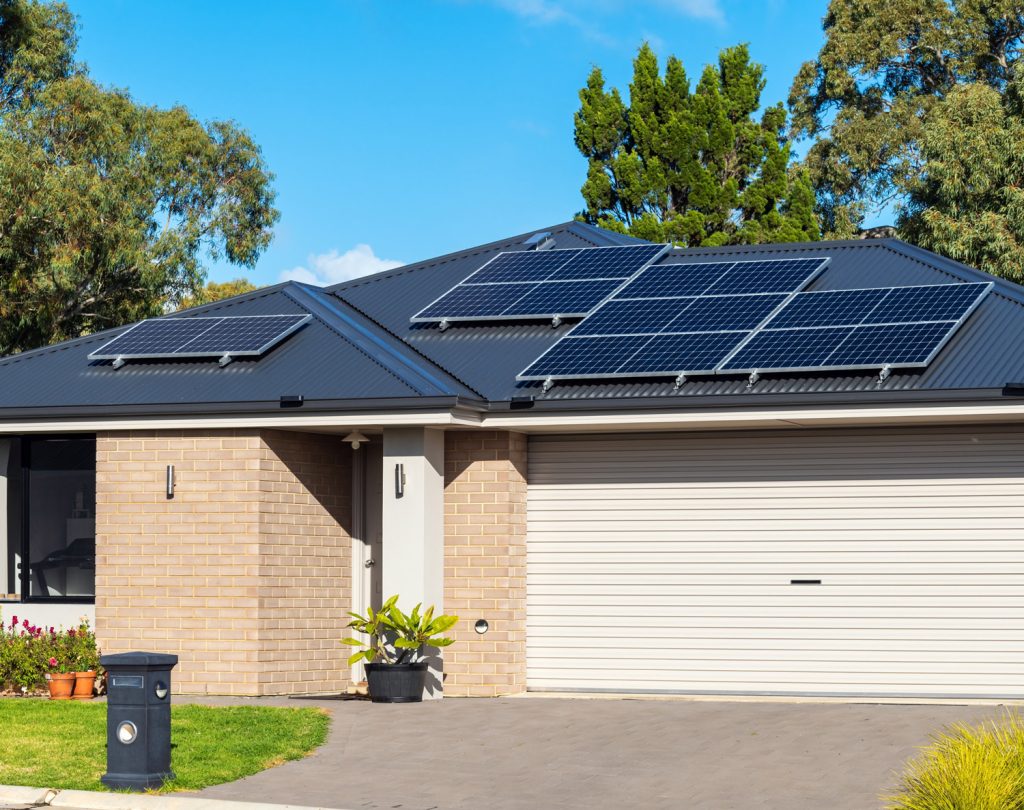
For many Australian households, going solar is one of the most cost-effective upgrades they can make. With strong sunlight, a government rebate built into every quote, and system prices low, most households see a return within a few years.
But the process can get confusing. Rebate calculations, inverter sizing rules, competing quotes, and questions like ‘is 6.6kW actually enough for my house?’ leave a lot of people stuck before they even start.
This guide answers all of it in plain English, so you can go into the process confident and informed.
Key Takeaways
- A 6.6kW solar system typically costs between $5,000 and $8,000 after the STC rebate (as of 2025)
- The STC rebate is applied upfront by your installer. You do not need to claim anything.
- The '120% rule' (technically a 133% DC-to-AC ratio limit) allows a 6.6kW panel array to be paired with a 5kW inverter, the most popular setup in Australia.
- 6.6kW suits most Australian homes. If you have a pool, EV, or ducted aircon, 10kW is worth looking at.
- Equipment quality and installer experience matter far more than finding the lowest price
How Solar Panel Installation Works (From Quote to Commissioning)
From your first conversation to the day your system turns on, here is what to expect.
Step 1: Site Assessment
A thorough assessment is the foundation of a well-designed system. Many reputable installers now use satellite imagery and remote shade analysis tools alongside in-person visits. What matters is that your roof layout, orientation, shading, and switchboard condition are all properly assessed before a design is finalised. Be cautious of any quote where none of this is discussed.
Step 2: System Design and Quote
Using your electricity bills and roof layout, your installer recommends a system size, panel brand, and inverter. A good design accounts for which direction your roof faces and how much power you use during the day, not just your overall daily consumption.
Step 3: Grid Connection Approval
Before any work starts, your installer lodges an application with your network distributor. In South East Queensland, that is Energex. Approval typically takes a few days to a few weeks. Requirements and timeframes vary by state and distributor, but grid connection approval is required everywhere in Australia before installation can begin.
Step 4: Install Day
A CEC-accredited installer carries out the physical work: mounting the panels, running DC cabling to the inverter, and connecting everything to your switchboard. Many reputable companies are also NETCC-approved retailers, which covers the sales and consumer protection side of the process. A bi-directional (smart) meter is also required to measure your solar exports; in most cases, this is arranged through your energy retailer or network distributor around the time of installation. Most residential jobs are completed in a single day.
Step 5: Inspection and Testing
The system is tested and commissioned before sign-off. In Queensland, an electrical inspection is required before grid connection. Requirements vary by state, so your installer will advise on what applies to you.
Step 6: Monitoring Setup
Most modern inverters connect to Wi-Fi and show your real-time generation through a smartphone app. Your installer should set this up before leaving and show you what normal output looks like for your system.
See the full breakdown of what to expect on our solar panel installation process page.
How Much Does It Cost to Install a Solar Panel Setup?
Pricing depends on system size, the brands you choose, your roof type, and your location. The figures below are typical after-rebate price ranges across Australia as of 2025. Prices shift over time with STC values and hardware costs, so treat these as a guide rather than fixed figures.
System Size |
Typical After-Rebate Cost (AUD, 2025) |
| 3kWs | $2,500 to $4,000 |
| 5kW | $3,500 to $5,500 |
| 6.6kW | $5,000 to $8,000 |
| 10kW | $7,500 to $12,000 |
| 13kW+ | $10,000 to $16,000+ |
The final price you pay will depend on:
- The brand of panels and inverter (budget, mid-range, or tier-1)
- Roof complexity, including steep pitch, tile roofs, or multi-storey access
- Whether your switchboard needs upgrading
- Your location and local installer rates
Quotes well below the lower end of these ranges usually mean cheaper components, limited local warranty support, or shortcuts on the install. The cheapest job on paper is rarely the best outcome in practice.
What Is the Australian Government Rebate on Solar Panels?
The main federal incentive is the Small-scale Renewable Energy Scheme (SRES), run by the Clean Energy Regulator. When you install an eligible solar system, it generates Small-scale Technology Certificates (STCs). The number of STCs depends on your system size and the amount of sunlight your location receives.
In almost all cases, your installer handles the STC process on your behalf and applies the value as an upfront discount on your invoice. You do not need to complete any forms or claim anything separately.
STC Rebate Explained in 3 Steps
- Your system generates STCs based on its size and your location's solar zone. Bigger systems in sunnier areas generate more.
- Your installer buys those STCs from you and deducts the value from your invoice upfront.
- You pay the reduced price. No forms, no portals, no waiting.
For a 6.6kW system in Brisbane (a Zone 3 location), the STC rebate is typically worth between $2,000 and $3,500, depending on the current STC spot price. Any reputable installer will show this clearly as a line item in your quote.
The SRES scheme phases down each year and ends in 2030, so the rebate is worth more now than it will be in future years.
What Is the '120% Rule'? (133% Inverter Oversizing Explained)
The ‘120% rule’ is a term widely used in consumer solar content, but it does not reflect the actual standard applied in Australia. In Australia, system design standards and industry guidelines (including those from the Clean Energy Council) generally limit the DC-to-AC ratio to 133%, meaning your total panel capacity can be sized up to 133% of your inverter’s rated output.
This limit exists to protect inverter performance, maintain system safety, and ensure compliant system design. It allows a practical degree of oversizing while keeping the system within safe operating parameters.
The ‘120%’ label is a colloquial shorthand that has persisted in the market despite not reflecting the actual limit. You will still see it used frequently, including by installers, so it is worth knowing what it actually refers to.
Example: 6.6kW Panels with a 5kW Inverter
- Panel capacity: 6,600W (DC)
- Inverter size: 5,000W (AC)
- Ratio: 6,600 / 5,000 = 132%. Within the 133% limit.
This is why 6.6kW panels with a 5kW inverter became the benchmark setup in Australia. You get maximum panel capacity without needing a larger, more expensive inverter.
It works because panels rarely hit their full rated output simultaneously. Heat, cloud cover, and roof angle all reduce real-world generation below the nameplate figure. When conditions briefly push the array above the inverter’s capacity, the inverter clips output at its rated maximum. In well-designed systems, a small amount of clipping on peak days is expected and is a normal trade-off for higher total daily energy production.
Export Limits and What They Mean for Your System
Your network distributor may also set an export limit, commonly 5kW, which caps how much power you can send back to the grid at any one time. In some areas, zero export or dynamic export limits apply. This is separate from the 133% sizing rule and is set by your distributor, not your installer.
A common misconception is that export limits make larger systems pointless. They do not. A 10kW system on a 5kW export limit still delivers strong savings by increasing how much solar you self-consume during the day. The more power you use directly from your panels rather than exporting, the less you draw from the grid and the lower your bill.
In some cases, export limits can also influence the inverter size your distributor will approve, particularly for larger systems.
Is 6.6kW Solar Enough for a 4 Bedroom House?
For most Australian families, yes. But bedroom count alone does not tell the full story. What matters is how much energy your household uses and when you use it during the day.
What a 6.6kW System Generates
In Brisbane, a well-oriented, unshaded 6.6kW system typically produces around 26 to 28 kWh per day. In Sydney or Melbourne, expect around 22 to 25 kWh per day, varying by season. Output will be lower for east or west-facing roofs, or where shading is a factor.
Household Profile |
Recommended System |
| 2 to 4 people, gas cooking and hot water, no pool or EV | 6.6kW is a good fit |
| 4 people, ducted air conditioning, all-electric appliances | 6.6kW may be borderline. Consider 10kW |
| Pool, EV charging, or home business power use | 10kW or more |
| 1 to 2 people, low daytime usage | 3 to 5kW is sufficient |
6.6kW or 10kW: How to Decide
If you have the roof space and the budget, most households are better off going slightly larger. The cost difference between 6.6kW and 10kW has narrowed considerably, and with feed-in tariffs declining, more panels means more self-consumption and lower bills, not just more export.
Choose 6.6kW if:
- Your daily usage is under 25 kWh
- You have gas appliances or a smaller household
- Budget or available roof space is a constraint
Choose 10kW if:
- You run ducted air conditioning, have a pool, or charge an EV
- Your daily usage is consistently above 25 kWh
- You want more headroom for future load growth (battery, second EV)
The single biggest factor is daytime usage, not overnight consumption. Solar only offsets the power you draw from the grid while the sun is generating. Run your dishwasher, washing machine, and air conditioner during the day, and you will see a far bigger reduction on your bill than if you run them at night.
It is also worth knowing that feed-in tariff rates in Australia have been declining. In many areas, you currently earn around 5 to 10 cents per kWh for power you export, compared to 25 to 35 cents per kWh for power you import, though rates vary by state and energy plan. This makes self-consumption far more valuable than export, and reinforces the case for sizing your system to what you actually use during the day.
Thinking about adding a battery to cover evenings? See our battery installations page.
Choosing the Right System Size
Use the scenarios below as a starting point. Your installer should confirm sizing based on your actual electricity bills and usage patterns.
Under 15 kWh Per Day
Best for one to two-person households that are mostly out during the day.
- Recommended size: 3 to 5kW
- Good option when budget or roof space is a constraint
15 to 25 kWh Per Day
Best for a family of three to four with standard appliances and some daytime occupancy.
- Recommended size: 6.6kW
- Covers the bulk of most household bills without oversizing
25 to 40 kWh Per Day
Best for larger households running ducted air conditioning, an EV, a pool, or a combination.
- Recommended size: 10 to 13kW
- Pair with a battery to cover evening usage and maximise savings
40 kWh Per Day or More
Best for home businesses, large households with multiple EVs, or heated pools.
- Recommended size: 13kW or more, potentially across multiple inverters
- Battery storage will significantly increase your return on investment
Planning for a Battery Later
If a battery is not in your budget right now, ask your installer about a battery-ready setup. A hybrid inverter and correctly configured switchboard mean you can add storage later without a costly overhaul.
Common Mistakes When Buying Solar (And How to Avoid Them)
1. Choosing Based on Price Alone
A low quote almost always means cheaper components, less experienced labour, or both. Off-brand panels with no local warranty support can be expensive to deal with when something fails a few years in. Compare quotes carefully and look at what each one actually includes.
2. Ignoring Shading
Even partial shading on one panel for a few hours a day can noticeably reduce whole-system output. A thorough installer will assess shading during the site assessment. If they do not raise it, ask directly.
3. Overlooking Roof Orientation
North-facing delivers the best output in Australia. East and west-facing setups still perform well, particularly if your usage peaks in the morning or afternoon. South-facing is generally avoided. Make sure your system design reflects your actual roof layout.
4. Unrealistic Payback Expectations
If an installer claims a three-year payback on an $8,000 system, push back. Typical payback periods in Australia sit between four and eight years, depending on usage, your feed-in tariff rate, and how much solar you self-consume during the day.
5. Vague Warranty Terms
Panels carry 25-year performance warranties. Inverters are typically five to ten years. Before signing, confirm exactly what happens if something fails and who handles the warranty claim on your behalf.
6. No Monitoring After Install
Without monitoring, a system can quietly underperform for months without anyone noticing. Make sure your installer sets up the app, shows you what your normal daily output looks like, and explains what to watch for.
Solar Buying Checklist
Before You Sign Anything:
- Installer is CEC-accredited; check if the company is also NETCC-approved
- Roof layout, shading, and switchboard properly assessed (in person or via detailed remote tools)
- Panel brand and model specified in the quote
- Inverter brand and model specified in the quote
- STC rebate clearly itemised as a line item
- Warranty terms for panels, inverter, and workmanship confirmed in writing
- Export limit for your area confirmed
- Grid connection application included in scope
- Monitoring app setup confirmed as part of the install
- Battery-readiness discussed
Mini Glossary: Key Solar Terms
| Term | What It Means |
| kW (kilowatt) | A measure of power. Used to describe system size, e.g. 6.6kW. |
| kWh (kilowatt-hour) | A measure of energy. Used to describe how much power is used or generated, e.g. 25 kWh per day. |
| Inverter | Converts the DC electricity your panels produce into the AC electricity your home uses. |
| Export Limit | The maximum power your network distributor allows you to send back to the grid. Varies by state and distributor. |
| STCs | Small-scale Technology Certificates. Used to calculate the upfront government solar rebate. |
| SRES | Small-scale Renewable Energy Scheme. The federal program that issues STCs. |
| CEC | Clean Energy Council. Australia's peak solar body. CEC-accredited installers meet the national standard. |
| Feed-in Tariff | The rate your energy retailer pays for excess solar exported to the grid. Rates vary by state and plan. |
| VPP | Virtual Power Plant. A network of home batteries managed collectively to support the grid, often with financial incentives for participants. |
Conclusion
Solar is one of the most cost-effective upgrades available to Australian homeowners right now. The rebate is genuine, the technology is well established, and as feed-in tariffs continue to fall, households see the greatest benefit when their system is sized to closely match their energy use.
Get the system size right for your household, choose a qualified installer, and do not let price alone drive the decision. Those three things make the difference between a solar system that pays for itself and one that causes headaches for years.
If you’re on the Gold Coast or Brisbane and want tailored advice, PS Electrical can provide a detailed quote and system design based on your home and usage.
Request a free quote, explore our solar installation service.
Frequently Asked Questions
How much does it cost to install a solar panel setup?
A 6.6kW system typically costs between $5,000 and $8,000 after the STC rebate, based on 2025 pricing. The final figure depends on panel and inverter brands, your roof type, whether a switchboard upgrade is needed, and your location. Prices shift over time with STC values and hardware costs. Get at least two or three itemised quotes before making a decision.
What is the Australian government rebate on solar panels?
The rebate is delivered through the Small-scale Renewable Energy Scheme (SRES) as Small-scale Technology Certificates (STCs). In almost all cases, your installer handles this and applies the value as an upfront discount on your invoice. For a 6.6kW system in Brisbane, the rebate is typically worth $2,000 to $3,500, depending on current STC prices.
What is the solar 120% rule?
The ‘120% rule’ is a common shorthand for the inverter oversizing standard applied in Australia. In practice, system design standards and industry guidelines generally limit the DC-to-AC ratio to 133%, meaning panel capacity can be up to 133% of the inverter’s rated output. This is why a 6.6kW array is routinely paired with a 5kW inverter. The limit exists to protect inverter performance and maintain system safety, while still allowing a practical degree of oversizing that improves real-world energy yield.
Is 6.6kW solar enough for a 4-bedroom house?
For a typical family of three to four without a pool or EV, yes. In Brisbane, a well-oriented 6.6kW system generates around 26 to 28 kWh per day on average. Households with high daytime loads like ducted air conditioning, a pool, or an electric vehicle are generally better suited to 10kW.
How long does solar panel installation take?
The physical installation is usually completed in one day. The full process from quote to switch-on, including design, grid connection approval, and inspection, typically takes two to six weeks, depending on your network distributor and state requirements.
Do solar panels work in cloudy weather?
Yes. Output is reduced on overcast days, typically to between 10 and 25 per cent of peak capacity, but panels continue generating. Solar systems still deliver meaningful annual savings in cloudy climates because generation accumulates consistently across the year.
Should I add a battery now or later?
For most households focused purely on payback period, solar-first makes sense, and a battery can be added later as prices continue to fall. That said, a battery may make financial sense sooner if you are on a time-of-use tariff with high peak rates, if backup power during outages is a priority, or if you want to participate in a Virtual Power Plant (VPP) program. Some states offer VPP incentives that can materially improve battery economics. Ask your installer to model both scenarios against your actual usage before deciding.
What maintenance do solar panels need?
Very little. In most areas, rainfall keeps panels clean enough. In dusty locations, a rinse once or twice a year is worthwhile. Check your monitoring app occasionally for any unexpected drop in output. An electrical inspection every five years is recommended and may be required to keep your warranty valid.